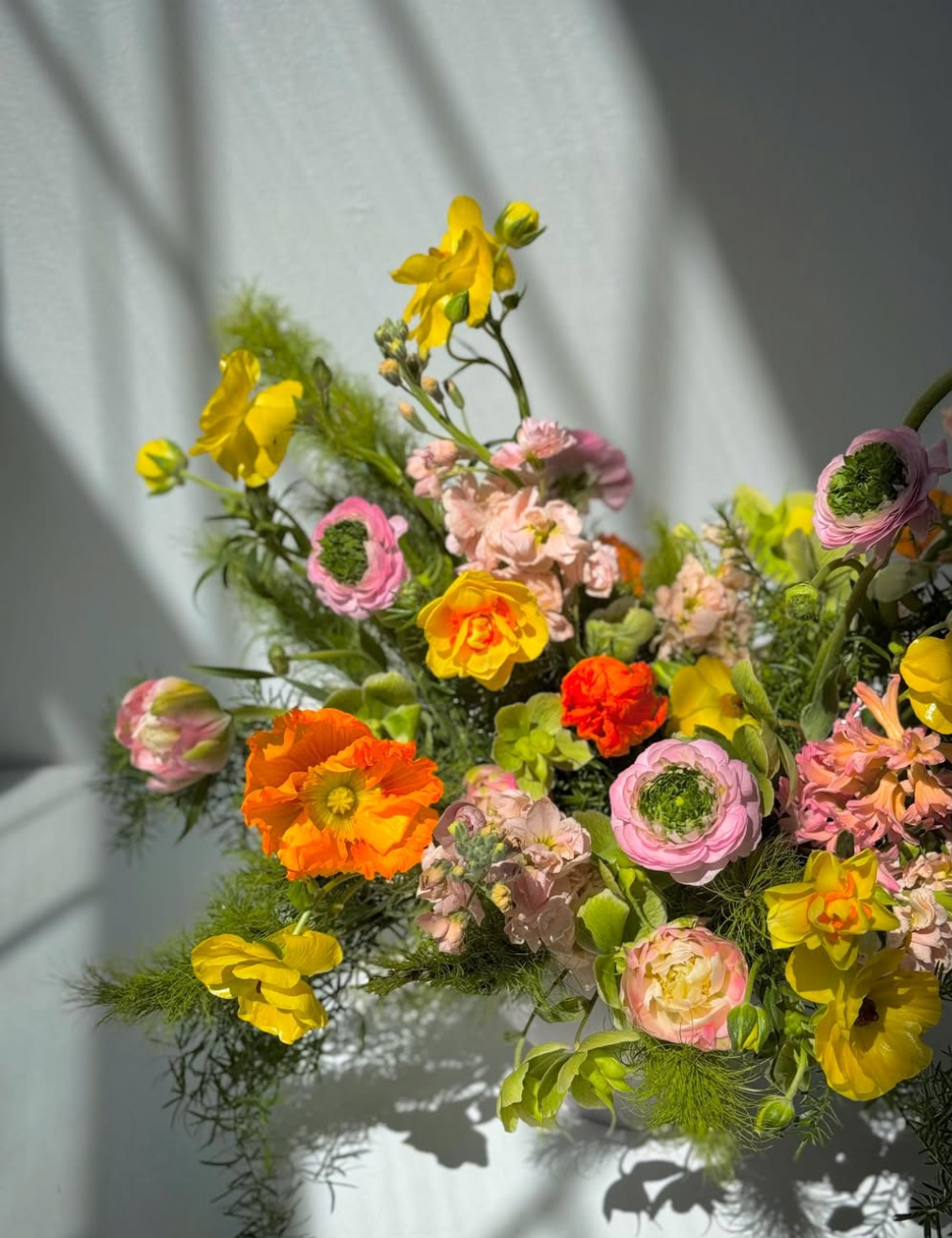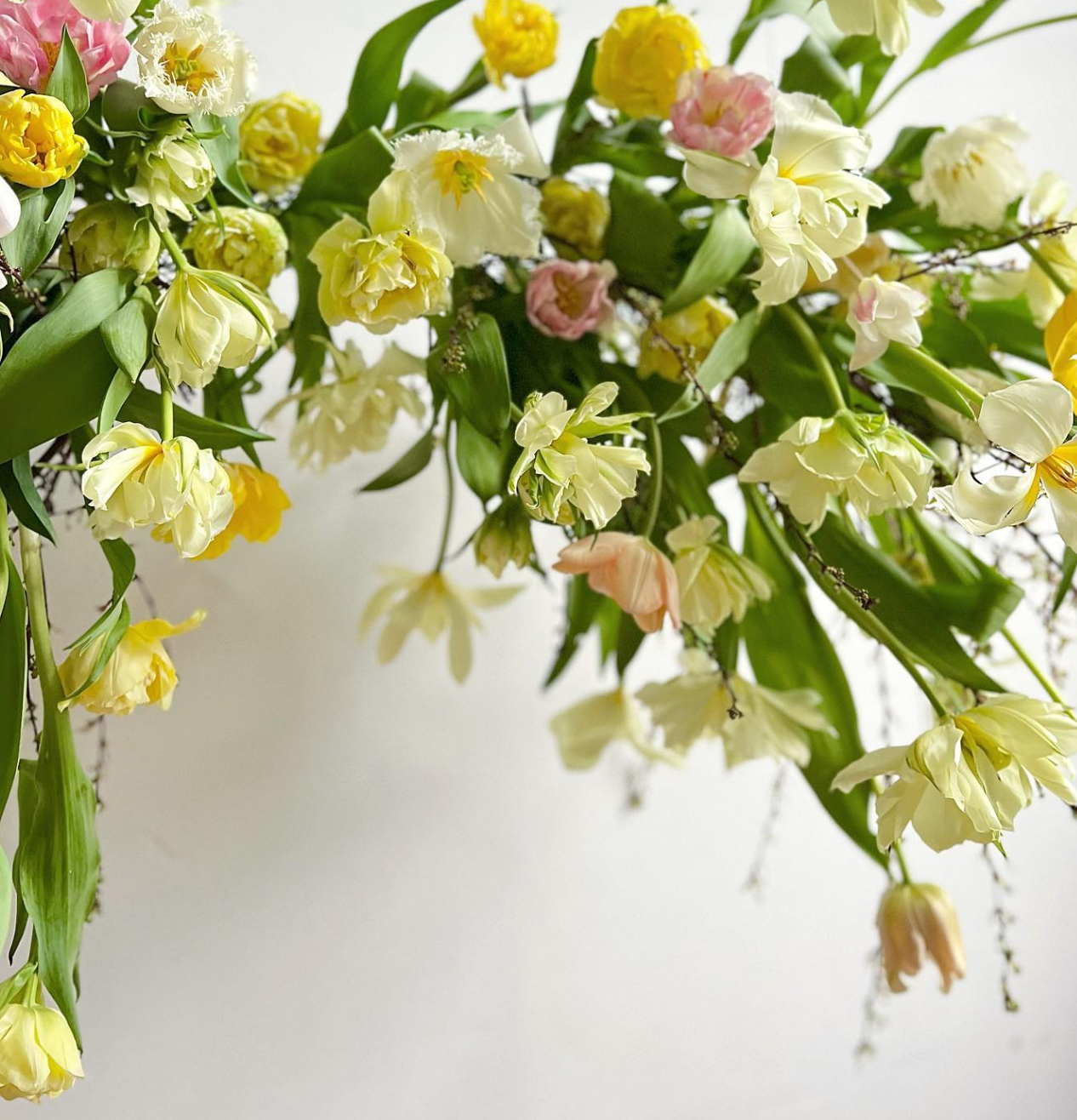

After a long winter, seasonal flowers like tulips, hyacinth, and flowering branches are giving that RENEWAL we are all desperately after.Spring flowers in Maine start arriving in early spring (March–April), beginning with tulips, hyacinth, and flowering branches like forsythia. This is one of the most impactful times to send flowers, as color and scent return after winter and local product begins to phase in week by week.
There’s a very specific moment in Maine when things begin to change. It’s not warm yet. The landscape is still mostly brown.
But inside the studio, everything starts to turn. We move from relying almost entirely on imports to to bringing in the first truly alive, expressive spring flowers and the first local stems.
It's one of the most exciting times of the year.
After months of winter, people in Maine aren’t just buying flowers because they’re pretty. They’re buying them because they NEED them. Homes have been closed up for months. Color has been absent from the landscape. Light is just starting to return.
Flowers in early spring feel really different. They're more emotional, more noticeable, and more necessary
If there’s one time of year when sending flowers in Maine has the biggest impact, it’s now.
Tulips are the first Spring flower we get in mass. Our flower farmers pick bonkers gorgeous varieties, ones that are unique, multi colored, and most unsual from standard tulips- they have long shapely stems.
Maine-grown tulips move. They open dramatically. They change shape over time.
A tulip arrangement on day one looks completely different by day three.
They lean toward the light, stretch, and almost rearrange themselves. They feel very alive in your home.
Hyacinth is one of those flowers people don’t forget. They are intensely fragrant, have bright, saturated color, are compact but full of presence
They bring something that winter has been missing entirely- scent in the air!
Even a small amount changes a whole room.
Forced branches are often the first local-feeling element to arrive.
Forsythia, in particular- that bright yellow, local ones are architectural, they almost glow indoors.
They give arrangements structure and a sense of place, like a bridge between winter and what’s coming next.
Early spring is a transition. We’re still sourcing some of the best flowers from the Dutch market, which gives us access to incredible varieties and quality while Maine warms up.
But week by week, more local stems start to come in and our designs become more grounded in the landscape around us.
It’s not an overnight switch. It’s a layering. And that’s what makes this moment so special.
If you’re paying attention, you can feel it building:
Tulips → Hyacinth + branches → Ranunculus → Anemone → Peonies, lilac + full spring abundance
Each week, there’s more to work with. More movement and texture.
OMG NOW!
This is when flowers are needed the MOST.
The contrast with winter is still strong. The impact is highest. People notice and feel it more.
Tulips, hyacinth, daffodils, and flowering branches like forsythia are our earliest spring flowers.
We get as much as we can locally! In early spring we mix some imported (often from the Dutch market), with increasing local availability each week.
Becuase they have unparalleled shape, texture, variety, and colorsThey are one of the first seasonal flowers and continue to grow and move after being arranged.
Anything local plus what the Dutch market is dishing out.